Experience the Tragedy of the Commons.
Learn how to win together for the long term.
The interactive Fishing Game models a common-pool resource dilemma. In one hour, a team experiences the trade-offs, sees the consequences, and understands the value of following sustainable rules.
What's the Problem?
When a resource is shared — the sea, pasture, budget, brand — each person can “take a little more,” thinking it won’t matter. But if many do this, the resource degrades and everyone loses. This is the Tragedy of the Commons: short-term gain for one erodes long-term benefit for all.
Here's a clear TED-Ed video that demonstrates the problem:
How the Game Models This
Common Resource
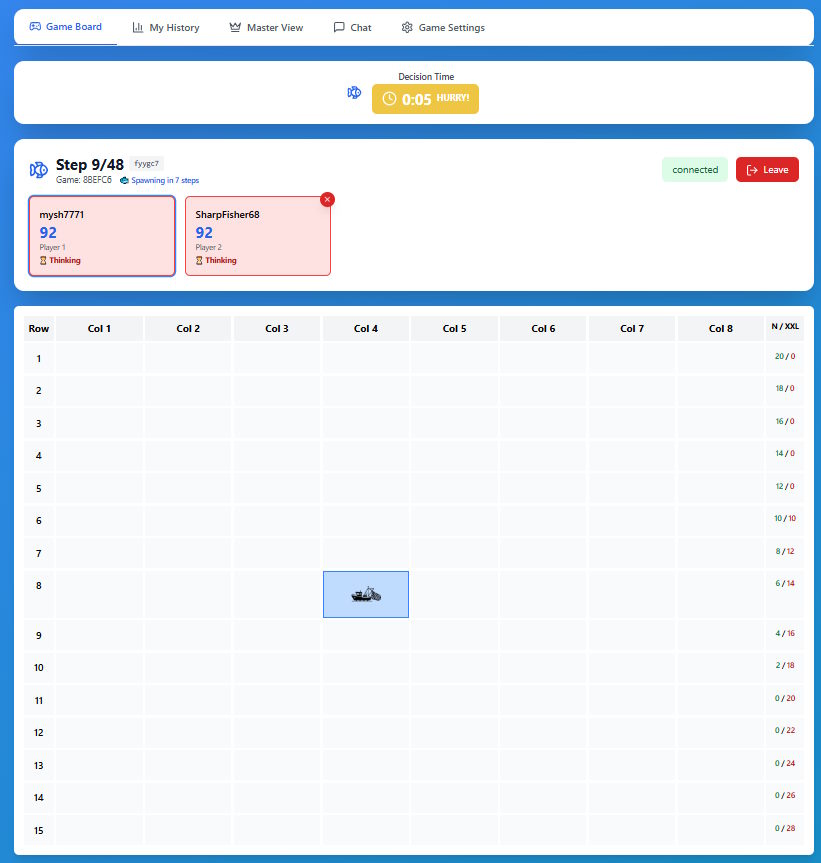
Players share a common resource shown on a visible field. Its dynamics are visible to everyone: if players act selfishly, the resource deteriorates; with coordinated actions, it stabilizes or recovers. The visualization helps you see the system rather than just your own score.
Behavior and Choice

In each short round, players choose among several behaviors — from maximum extraction to following norms, from switching to other activities to strengthening enforcement or supporting sustainability. Different strategies affect both personal scores and the overall resource.
Natural Cycles
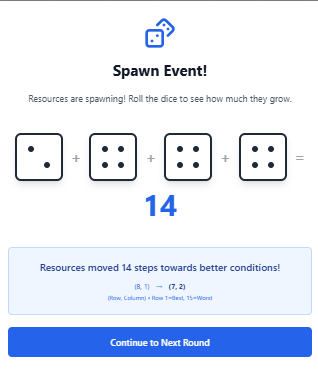
Periodically, the model includes “natural” positive changes (e.g., regeneration during favorable periods). The key question is whether collective efforts can lock in these gains and prevent degradation.
Coordination and Rules
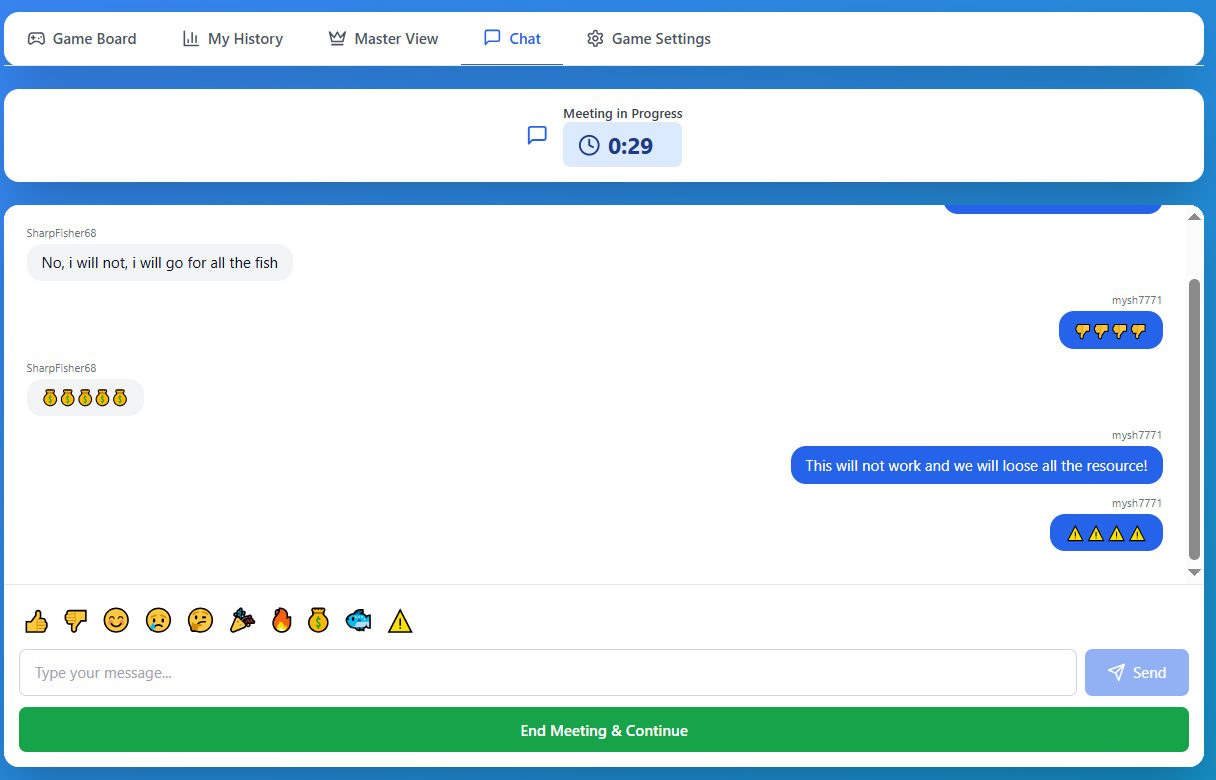
Built-in meetings give the team time to agree: discuss norms, sanctions, transparency, and roles. Players test different rules and behavioral norms, then see in the next period how they are followed and how the resource trajectory changes.
Feedback and Conclusions
After the game, participants see the overall trajectory, individual/team results, and discuss which agreements worked. The main insight: by putting the common good before private gain, the group increases long-term benefit and preserves the resource.
What Changes After Playing
Understanding
The commons ≠ “nobody’s.” They require rules, transparency, and coordination.
Discovery
Long-term profit is greater when participants put the common good before private gain.
Skill
The team learns to negotiate, apply sanctions/incentives, and stay the course.
Why It Works
Experience vs. Lecture
Emotion + facts = lasting understanding
Short Cycles
Fast moves → fast consequences
Transparency
Everyone’s contributions and the resource trajectory are visible
Adaptability
Playable in a room or remotely; parameters are configurable
For Whom
The game fits many audiences — from students to managers
Schools and Universities
A quick and visual grasp of economic and management principles; discussion of fairness and rules.
Public Sector Leaders
Practice collective decision-making, test the effects of sanctions/incentives, and understand institutional settings.
Business Teams
Builds trust, shared goals, and discipline; helps teams see the system rather than just departmental KPIs.
Ready to Try?
Gather 2–20 people and connect from laptops or phones. The host creates a room; participants enter by code. Everything else happens inside the game.
Pricing
Choose a plan that fits your needs
Free — Basic
Participate in games by invitation and complete a full session.
- Join by code/link
- Meetings (text chat) at scheduled steps
- Results on screen and by email after the game
- Basic email support
Pro — Personal Dashboard
For teachers and facilitators. Store results, analyze games, export data.
- Everything in Free
- Create and run the Fishing Game
- 10 games per month, 10 participants per game
- Personal dashboard with game history
- XLSX export
Workshop — Projector & Branding
For workshops and corporate sessions. One shared screen, custom branding, and batch exports.
- Everything in Pro
- Projector mode (large font, dark theme)
- Unlimited games per month, 20 participants per game
- Branding (logo, colors)
- Bulk participant invites
- Batch export of all games per event
- Priority support
FAQ
Why a game instead of a lecture?
Understanding doesn’t “stick” without experience. A game combines emotion + facts → creating personal insight and willingness to change behavior.
What if everyone chooses XXL?
You’ll see a rapid slide down the grid and everyone’s scores fall. It’s a safe way to experience a bad scenario and discuss rules that prevent it.
Can you play remotely?
Yes. The game is equally convenient online and offline.
How much time is needed?
About an hour for the full session.
What's the minimum/maximum group size?
2 to 20 people (5–12 is optimal).
Can it be adapted to my case?
Yes. Meeting rules, regeneration (“spawn”) frequency, penalties/incentives, turn duration, etc. can all be configured.